
Inequality: When Advantage Becomes Entitlement

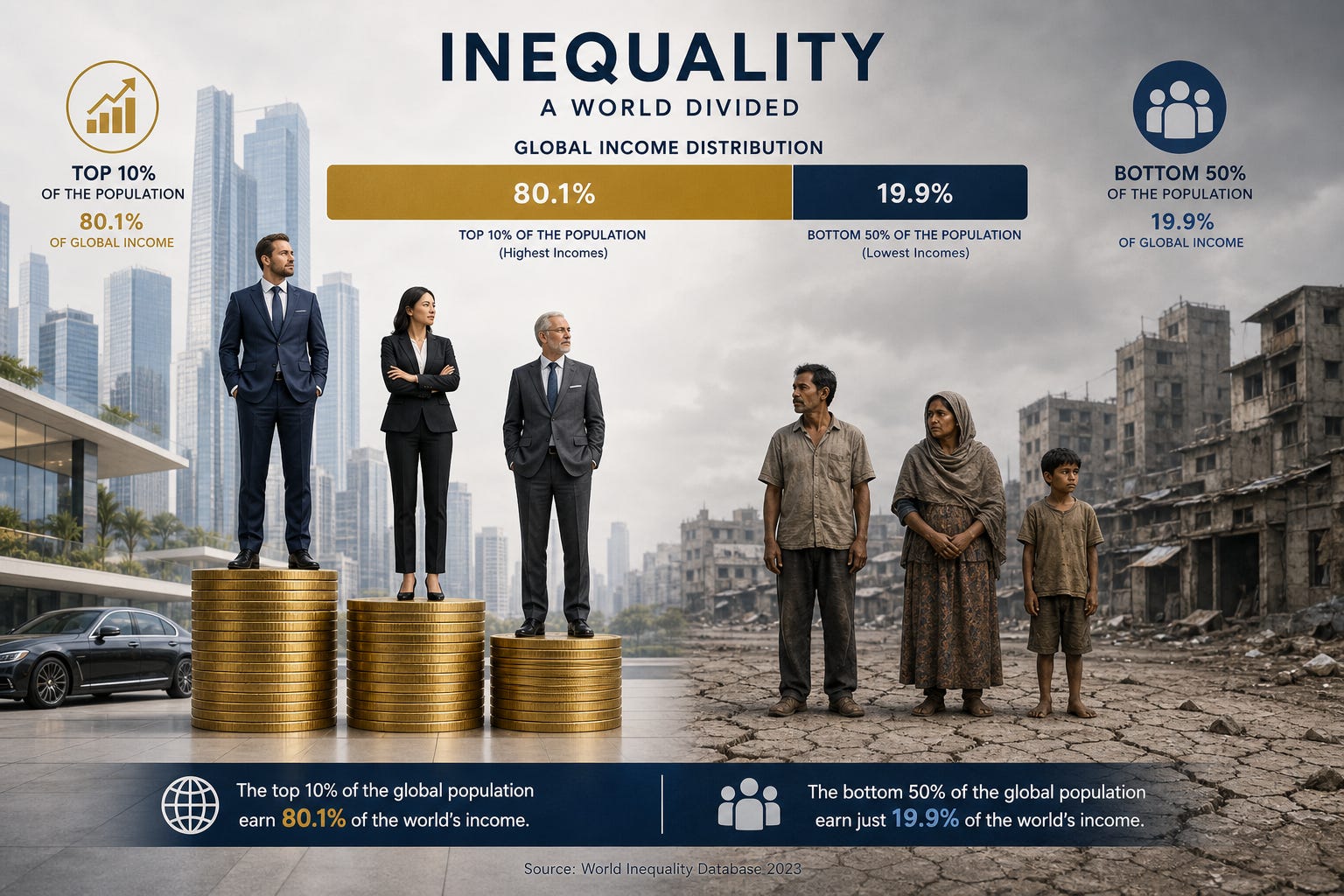
I often hear it said that some difference between people is natural or even necessary; after all, we do not all have the same talents, resources, or circumstances. Yet there is a clear line between natural variety and harmful inequality a line that, once crossed, begins to weaken the bonds that hold people together.
Inequality is sometimes defended as a sign of freedom or a reward for hard work, but when it becomes extreme or entrenched, it does not lift people up; it creates distance, resentment, and a sense that the community no longer belongs to everyone. It is not always obvious at first; it can grow slowly, accepted as normal, until it becomes so large that it changes the very character of society. To understand how communities unravel, we must explore what inequality truly is, what it is not, and why it poses such a deep threat to lasting stability and fairness.
What Inequality Truly Is - and What It Is Not
Inequality is not the same as natural differences, varying levels of skill, or the right to enjoy the fruits of one’s own labour. This is one of the most common misunderstandings: the belief that treating people fairly means treating them exactly the same, or that any difference in outcome is automatically unjust. In truth, fairness does not demand uniformity; it recognises that people start from different places and may need different support to thrive. Harmful inequality arises not from the fact that people are different, but when those differences are turned into permanent barriers, when advantage becomes privilege that is passed down without merit, and when disadvantage becomes a cycle that is almost impossible to escape.
True inequality, as I have come to understand it, is the unjust and persistent gap between groups of people in terms of power, resources, opportunities, dignity, and voice. It is not merely that some have more than others; it is when that gap becomes so wide that it shapes every part of life where you live, what you learn, how healthy you can be, and whether you feel safe or valued.
It can appear in many forms: in wealth and income, certainly, but also in access to education, healthcare, justice, and influence. It is often hidden behind ideas of merit or tradition, but at its core it creates a system where a person’s chances in life depend more on their background, status, or connections than on their character, effort, or potential. It is the opposite of equity: it does not give people what they need to flourish, but instead allows advantage to accumulate while disadvantage deepens.
It is also important to recognise that inequality is rarely just a matter of individual choice. It can become woven into the very structures of society, so that even well‑meaning people may act in ways that widen the gap without fully realising it. When rules are written to favour those who already have, when opportunities are limited to a small circle, or when the voices of the most vulnerable are easily ignored, inequality becomes a way of life. In a dysfunctional society, it is often presented as inevitable or even beneficial, yet in reality it turns shared life into a competition where the rules are stacked against many.
Why It Matters - and How It Harms Society
When we understand inequality in this full sense, it becomes clear why it is so damaging to long‑term wellbeing. A society with deep and growing inequality may seem prosperous or stable on the surface, but it is built on fragile foundations. When people believe that the system is rigged, that hard work will not be rewarded, or that some groups are valued more than others, trust begins to crumble.
Why would someone invest in a future they feel excluded from? Why would they respect laws or leaders that seem to serve only the interests of a privileged few? Over time, this erodes the sense that we are all part of one community, replacing it with a mindset of “us and them”.
The harm extends to every area of life. Extreme inequality stifles collective progress, because it wastes the talent and potential of so many who are held back by circumstance. It creates division and tension; resentment grows among those who are left behind, while fear and isolation often take hold among those who have much to lose. It weakens social cohesion, as people no longer share common experiences, values, or hopes. Even those who benefit from inequality are affected: they may become disconnected from the struggles of others, unaware of the true needs of the community, and overly reliant on protection rather than mutual respect.
Most importantly, inequality undermines the very idea of the common good. It suggests that the success of some must come at the expense of others, and that dignity and opportunity are limited resources to be hoarded rather than shared. It creates a cycle that is hard to break: disadvantage limits opportunity, which leads to lower achievement, which in turn is used to justify further exclusion. In the long run, no society can remain healthy when large numbers of its people feel that they do not truly belong, or that their contribution does not matter.
How It Takes Root - What Signs to Look For
Inequality rarely appears suddenly; it grows gradually, often accepted as just the way things are. It begins when we stop seeing each other as equals, when we assume that success is entirely a matter of personal effort while failure is entirely a matter of choice, and when we ignore the ways in which advantage can be passed from one generation to the next. It takes root when we become comfortable with difference turning into distance, when we accept that some areas or groups will always be worse off, and when we stop asking whether the rules and systems we have actually serve everyone fairly.
Some of the early signs are easy to overlook: a growing gap in access to good education or healthcare, the belief that some people “deserve” less than others, decisions that consistently favour the wealthy or powerful, or a sense that public life is no longer relevant to ordinary people. It spreads when we blame those who are struggling instead of looking at the barriers they face, when we treat poverty or disadvantage as a personal failure rather than a shared concern, and when we remain silent as opportunities become more limited for many. These patterns do not happen by accident, but by small choices and attitudes that over time create a world where the gap between people seems impossible to cross.
Recognising these signs is not about seeking to make everyone identical, but about seeing when difference turns into unfairness. It reminds us that inequality is not an unchangeable fact of nature; it is something created by human choices, and therefore something that can be addressed and changed when we choose to value the dignity of all.
When we look closely at the patterns that lead societies to become divided and unstable, we see that inequality is far more than an economic issue. It is a moral and social one, striking at the heart of what it means to live together as neighbours. It begins with small assumptions and attitudes, but if left unchallenged, it grows to create deep divides, erode trust, and waste the very potential that could help a community flourish.
Yet understanding inequality also gives us direction. When we recognise how it grows, we can choose differently. We can choose to build systems that give everyone a fair chance, to value people for their inherent worth rather than their status or wealth, and to remember that the strength of a community is measured not by how well the few prosper, but by how well all can live with dignity and hope.
Inequality thrives when we accept it as normal, but it fades when we commit to fairness, inclusion, and the belief that we truly belong to one another.